Seasonal perimeter defense addresses the structural perimeter of Casper homes where foundation shifting and freeze-thaw cycles create access gaps. Structures near the North Platte River corridor or along the exposed…
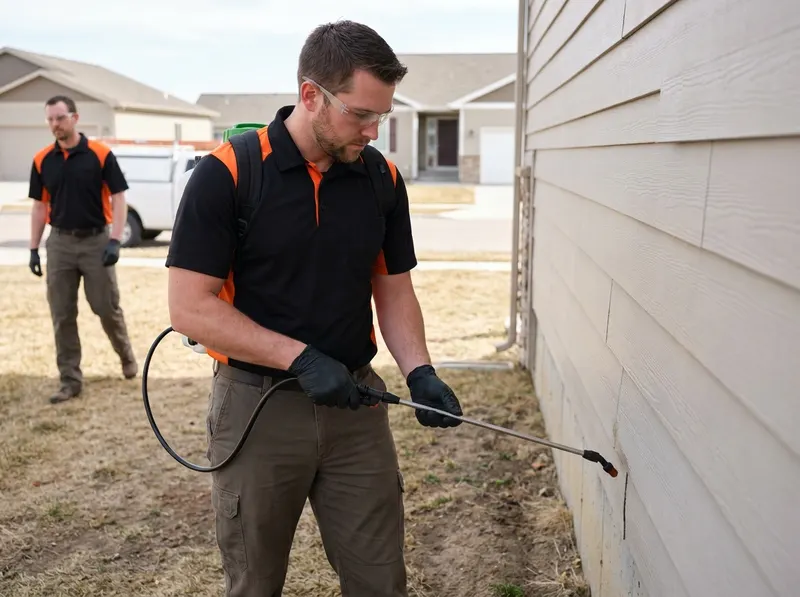
Seasonal perimeter defense addresses the structural perimeter of Casper homes where foundation shifting and freeze-thaw cycles create access gaps. Structures near the North Platte River corridor or along the exposed base of Casper Mountain face heavy pressure from western black widows and hobo spiders migrating toward crawlspaces as autumn temperatures drop below 40 degrees Fahrenheit. Rather than masking indoor sightings with aerosol sprays, an exterior liquid micro-encapsulated formulation binds directly to concrete foundations, brick facings, and compacted rock beds. This treatment resists degradation from sustained 30-mile-per-hour winds typical in Bar Nunn and Big Horn Terrace, maintaining insect repellency across a continuous 8-foot total zone.
Selecting a seasonal perimeter barrier serves properties experiencing outdoor pest migrations before interior colonization begins. If spiders or ants have established active nests inside finished drywall or insulation, targeted interior void injections are required alongside exterior work. The primary trade-off of an exterior-only perimeter shield involves longevity: direct exposure to high ultraviolet light in high-elevation areas like Mountain View and Centennial Hills limits the residual barrier life to approximately 60 to 90 days. Consequently, three timely applications spaced across spring, mid-summer, and late autumn are required to manage shifting life cycles from emerging spring spiderlings to overwintering adult boxelder bugs.
1. Technicians physically clear webbing and insect nests from soffits, window assemblies, and foundation vents using extension sweeps up to 20 feet high. 2. A non-staining liquid barrier is applied 3 feet up the vertical foundation wall and 5 feet out across adjacent gravel, turf, or concrete walkways. 3. Granular moisture-resistant barrier products are dispersed along mulch beds and dense groundcover in locations like Garden Creek and Wolf Creek to reach the soil layer. 4. Foundation entry points around utility conduits, hose bibs, and crawlspace vents receive dry dust applications to prevent insects from bypassing the surface perimeter. In Southridge, Fairview, and the Kelly Walsh area Hills, this method stops subterranean ants and foraging spiders from penetrating rim joists without relying on broadcast indoor pesticide applications.
Every job gets a firm, written price after a free on-site visit.
Tell us about your seasonal spider and insect perimeter shield job in Casper and we'll send a clear, written quote, usually the same day.
 Savero Pest Removal