Subterranean ant colonies in Natrona County survive prolonged sub-zero winter temperatures by excavating chambers 3 to 5 feet below the surface, beneath the regional frost line. In established neighborhoods such as…
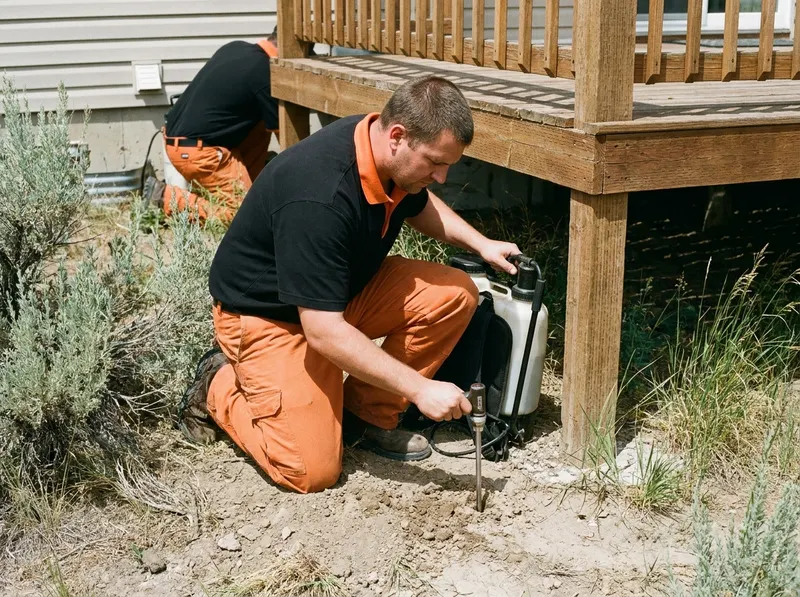
Subterranean ant colonies in Natrona County survive prolonged sub-zero winter temperatures by excavating chambers 3 to 5 feet below the surface, beneath the regional frost line. In established neighborhoods such as Paradise Valley, Garden Creek, and Mountain View, colonies establish primary nesting networks beneath structural concrete pads, patios, and gravel driveways. During spring snowmelt and early summer temperature swings, these subterranean networks expand upward against foundation footings. Standard retail contact sprays disperse surface workers without eliminating subterranean reproductive queens, causing the colony to fragment, bud, and push through expansion joints or electrical access points into domestic living areas.
Effective subterranean management replaces surface barrier sprays with specialized non-repellent transfer agents applied directly into the soil profile. Non-repellent active ingredients are undetectable by subterranean workers, allowing foraging ants to carry targeted active ingredients deep into sub-slab nests to achieve complete colony elimination. Properties situated near the North Platte River corridor or along the alluvial soils of Bar Nunn and Big Horn Terrace face higher ground moisture levels that attract subterranean species toward foundation sill plates. In sloped regions near Southridge, Centennial Hills, Wolf Creek, and the Kelly Walsh area Hills, dry wind exposure hardens the topsoil, forcing ant networks deeper into perimeter foundation cracks where mechanical soil injection is required for reach.
Subterranean treatments avoid binding homeowners to automated monthly service agreements. A single perimeter and sub-slab intervention generally resolves the nesting source when combined with freeze-thaw void sealing. The operational trade-off of subterranean chemical injection versus interior barrier spraying is installation invasiveness: treating below-grade nests requires mechanical drilling through targeted exterior slabs and deep trenching along exterior basement walls, whereas basic interior spraying leaves exterior structural voids unaddressed. All non-repellent compounds cure to a dry state within 2 to 4 hours, binding directly to Natrona County clay soils without leaching into domestic pet turf areas.
Every job gets a firm, written price after a free on-site visit.
Tell us about your subterranean ant colony management job in Casper and we'll send a clear, written quote, usually the same day.
 Savero Pest Removal