Ant infestations across Natrona County typically spike during two periods: initial spring thawing along the North Platte River basin and dry mid-summer stretches when ground colonies search indoor plumbing runs for…
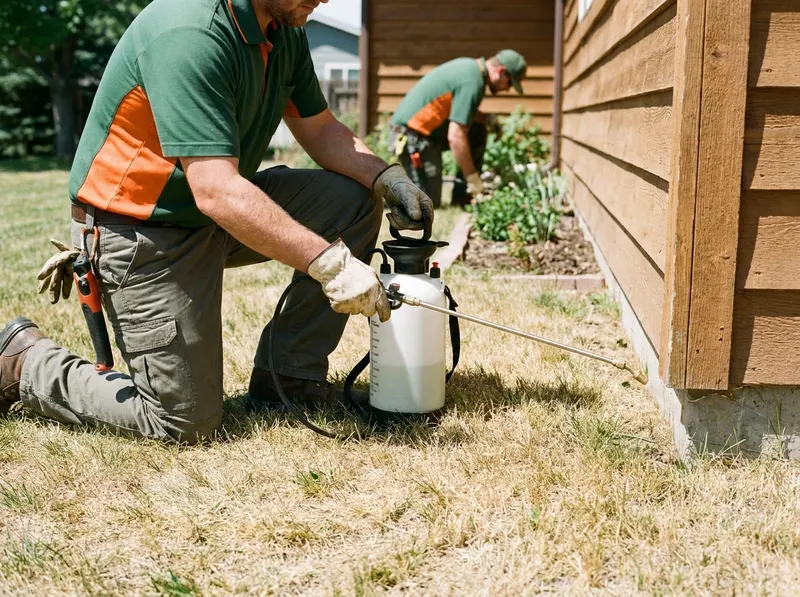
Ant infestations across Natrona County typically spike during two periods: initial spring thawing along the North Platte River basin and dry mid-summer stretches when ground colonies search indoor plumbing runs for moisture. A surface spray from a retail store repels scout workers, which forces a single queen colony into 'budding', a defensive reaction where workers split into multiple separate egg-laying queens hidden deeper inside wall voids. Professional non-repellent transfer chemistry avoids this issue. Foraging workers cross an imperceptible barrier, return to the subterranean nest, and pass the active ingredient to the queen and larval broods through food-sharing before the compound activates.
Treatment selection matches the nesting biology of the specific species found on the property. Odorous house ants and pavement ants foraging across kitchen counters in Sunrise, Paradise Valley, and South Garden Creek require sweet or protein carbohydrate matrix baits paired with slow-acting fipronil or chlorfenapyr residuals. In heavily wooded parcels near Casper Mountain County Park or older framing in Big Horn Terrace and Mountain View, carpenter ant activity requires tracing satellite colonies inside roof sheathing, sill plates, or moisture-damaged subfloors. Carpenter ants do not consume timber like termites; rather, they excavate clean galleries across structural studs, depositing fine wood shavings known as frass outside kick-out holes.
Property perimeter conditions dictate the scope of application. Ground moisture along creek beds or irrigation ditches near Edness Kimball Wilkins State Park and Mills accelerates perimeter soil chemical breakdown, requiring a wider 10-foot gravel-and-turf granular application to stop foraging trails before ants bridge expansion joints. Exposed flagstone patios, concrete footers in Wolf Creek, and modern builds around Centennial Hills often house dense pavement ant populations underneath slab joints. The trade-off between exterior bait stations and liquid barrier trenching centers on speed versus longevity: non-repellent barrier trenching provides 60 to 90 days of continuous soil protection, whereas baiting relies entirely on foraging temperatures staying above 55 degrees Fahrenheit for worker movement.
Every job gets a firm, written price after a free on-site visit.
Tell us about your ant control job in Casper and we'll send a clear, written quote, usually the same day.
 Savero Pest Removal