Stinging insect activity in central Wyoming accelerates rapidly between June and September. In elevated subdivisions such as Centennial Hills, Wolf Creek, and South Garden Creek near the base of Casper Mountain,…
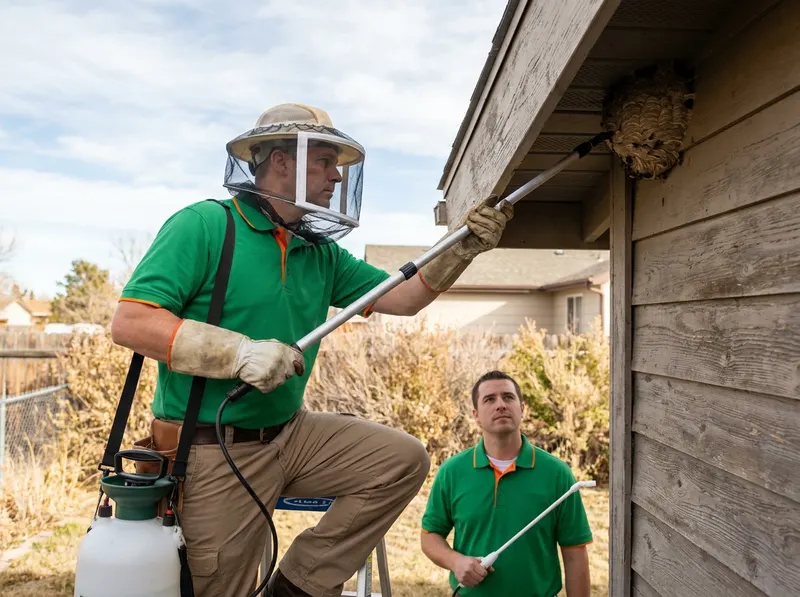
Stinging insect activity in central Wyoming accelerates rapidly between June and September. In elevated subdivisions such as Centennial Hills, Wolf Creek, and South Garden Creek near the base of Casper Mountain, western yellowjackets routinely build subterranean colonies inside abandoned rodent burrows. Conversely, river-adjacent areas like Mills and Paradise Valley along the North Platte River experience elevated paper wasp populations that establish open umbrella combs beneath roof overhangs, deck framing, and fascia boards. If yellowjackets penetrate exterior weep holes or siding trim in neighborhoods like Mountain View or Sunrise, workers can build internal carton nests directly against drywall, causing visible moisture stains and stinging hazards inside living spaces.
Eradication protocols depend strictly on nest architecture and physical placement. Exposed paper wasp nests receive direct residual contact formulations that neutralize adults within minutes, followed by physical removal of the comb to eliminate pheromone traces. Enclosed void infestations, common behind stone veneer in Big Horn Terrace or vinyl siding near the Kelly Walsh area, require micro-injection of dry insecticidal dust directly into the primary flight portal. Applying liquid spray or expanding foam over an exterior entry hole forces defensive wasps to chew through internal sheetrock into interior rooms. For non-aggressive honey bee swarms resting on tree branches near the Ford Wyoming Center or Bar Nunn, live capture and relocation to local apiaries takes precedence over lethal measures whenever structural integration has not yet occurred.
All aerosolized treatments utilize pyrethroid or botanical formulations applied with localized directional tips, keeping materials off open turf and away from indoor cats, domestic dogs, and backyard livestock. Technicians maintain a minimum standard operating base of $250 across all jobs to cover specialized high-reach extension poles, personal protective bee suits, and dedicated insecticidal dusters.
Every job gets a firm, written price after a free on-site visit.
Tell us about your wasp & bee removal job in Casper and we'll send a clear, written quote, usually the same day.
 Savero Pest Removal