Winter windstorms sweeping off Casper Mountain force undomesticated mammals toward residential thermal pockets. Striped skunks exploit foundation vents along older stone basements in Mountain View and Mills, while…
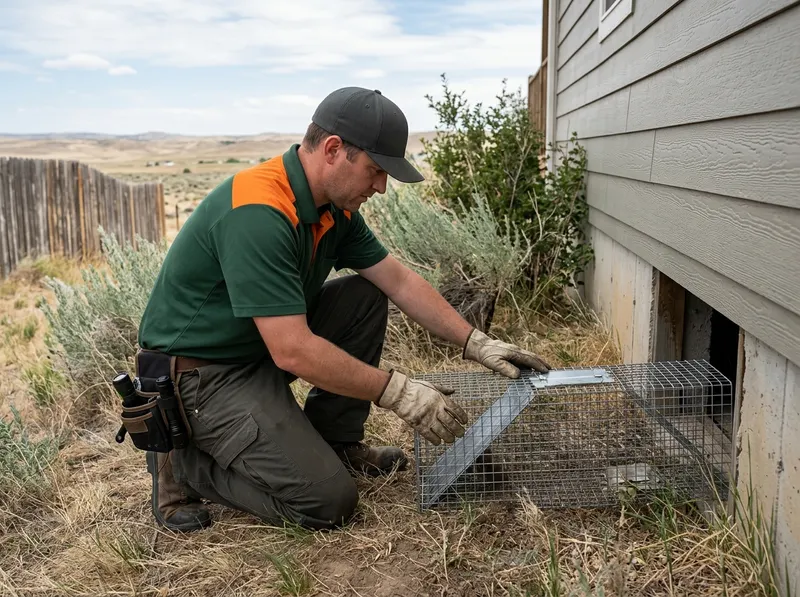
Winter windstorms sweeping off Casper Mountain force undomesticated mammals toward residential thermal pockets. Striped skunks exploit foundation vents along older stone basements in Mountain View and Mills, while raccoons tear into weakened roof decking and fascia boards near mature cottonwoods along the North Platte River in Paradise Valley and South Garden Creek. In newer subdivisions like Centennial Hills and Wolf Creek, prairie-adjacent construction often drives rock squirrels and pack rats under concrete porch slabs or into unsealed crawlspace vents. Left unaddressed, wildlife intrusions introduce ectoparasites, create structural fire risks through chewed electrical wiring, and leave biohazardous waste deposits in thermal insulation.
Humane eviction and physical exclusion represent the permanent resolution to wild animal intrusions, distinguishing professional intervention from generic poison applications. Ingestible rodenticides present lethal secondary-poisoning hazards to domestic dogs, barn cats, and local raptors, and frequently cause target animals to expire inside concealed wall cavities, generating severe decomposition odors. For non-hibernating mammals, technicians install heavy-gauge steel mesh over foundation vents, reinforce soffits with galvanized hardware cloth, and set gravity-triggered live cage traps checked daily. When dealing with federally protected maternal bat colonies roosting in Kelly Walsh area attics or near Fort Caspar, eviction occurs exclusively using specialized one-way bat check-valves installed outside the June-through-August pup-rearing season to prevent trapping flightless young inside structural voids.
Property owners choosing between live trapping and full structural exclusion encounter a distinct operational trade-off: targeted trapping removes the immediate nuisance animal at a lower initial cost, yet leaves structural vulnerabilities unsealed for future animals to reclaim the scent-marked territory. Full perimeter exclusion demands higher upfront investment for custom metal flashing, chimney caps, and trench screening, but structurally defends the property envelope against recurrent seasonal invasions. Technicians conduct an exhaustive 32-point perimeter check from roof ridge to foundation footing, establishing firm barriers that keep local wildlife in their natural riparian and mountain habitats.
Every job gets a firm, written price after a free on-site visit.
Tell us about your wildlife removal job in Casper and we'll send a clear, written quote, usually the same day.
 Savero Pest Removal